The illusion of AI as a solution in itself.
Artificial Intelligence has never been discussed so much. New models, new platforms, new promises emerge every week. Yet, within companies, a silent frustration is growing: lots of AI, little real impact.
This happens because most initiatives start in the wrong place. They start with the technology. With the tool. With "let's test it." But AI, by itself, doesn't solve anything . It only creates value when it addresses concrete business problems—those that directly affect cost, revenue, efficiency, and risk.
Where the pain truly resides.
The problems that AI can transform don't reside in IT. They reside in business areas. It's sales dealing with long sales cycles. It's operations grappling with daily inefficiencies. It's finance identifying waste before it turns into losses.
As I often say in my lectures: "Only the person carrying the bucket knows the weight of each drop of water."
Without listening to those who carry the bucket, any AI initiative risks becoming just another pretty-looking experiment on a slide, but irrelevant in its results.
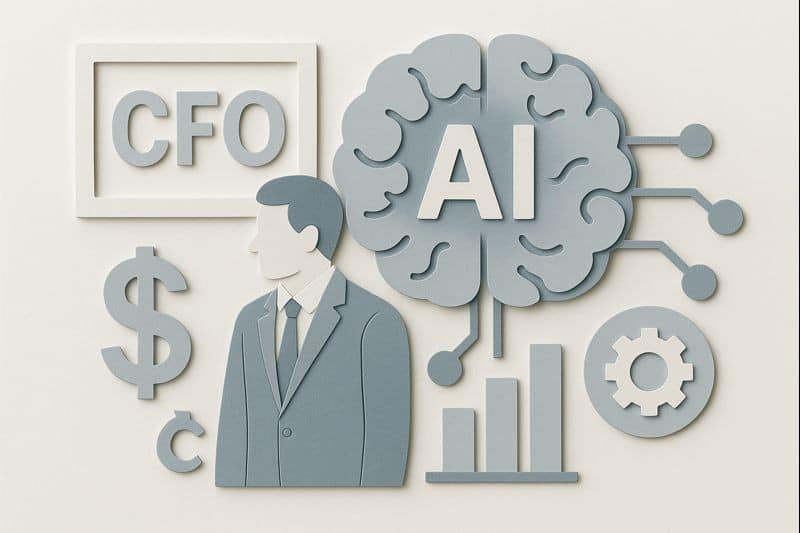
The CFO as a leader in creating value with AI.
In this scenario, the CFO's role changes profoundly. They cease to be merely the guardian of the budget and become the orchestrator of value creation.
It is the CFO who connects AI to ROI (Return on Investment). Who prioritizes problems with real financial impact. Who demands clear metrics before, during, and after.
Without this leadership, AI becomes an operational cost. With it, AI becomes a strategic lever.
The new CIO: less silo, more business.
The CIO remains essential — perhaps more so than ever. But the role is evolving. The CIO of the AI age needs to move between areas, understand processes, participate in strategic decisions, and translate business pain points into viable technological solutions.
Less focus on tools. More focus on results. Fewer isolated projects. More co-creation with business and finance.

How has Flexa addressed this challenge in practice?
At Flexa Cloud , we learned early on that AI without a well-defined problem doesn't generate value . That's why our approach never starts with the model.
It starts with difficult questions:
- Where is the greatest financial waste?
- Which process consumes the most human time without generating value?
- Which wrong decision is more costly for the company?
We work side-by-side with business areas and CFOs to map real pain points, prioritize opportunities, and only then design AI solutions. The CIO comes on board as a strategic partner from the start, ensuring governance, scale, and sustainability.
The result is not "AI projects," but measurable gains : reduced costs, increased productivity, faster decisions, and better use of capital.
Conclusion
The true AI revolution will not be led by IT alone. It will be led by the business, with the CFO at the center and the CIO as a strategic partner.
Ultimately, AI only makes sense when it solves a real problem. And only the person carrying the bucket knows exactly where the water is leaking.