Introduction
There's a phrase I hear with surprising frequency in meetings with executives, boards, and leadership teams:
"Do you have any clients who already use this?" "Are there any companies in my industry that have done this before?"
These two seemingly rational questions are—in practice—the biggest obstacle to real innovation in Brazilian companies.
They reveal a profound contradiction that few dare to admit: everyone wants to be innovative, but almost no one wants to be the first.
After more than 15 years leading AI, data, and cloud computing projects in large companies, I can confidently say: the biggest obstacle to digital transformation is not technology, budget, or talent. It's fear disguised as prudence.
The paradox of corporate innovation
Companies say they want to be disruptive, but they operate like professional followers.
They only feel comfortable when someone else has already taken the risk. When the market has already validated it. When the case study has already been published. When the competitor has already made the mistake and learned from it.
In this model, there is no market leadership. There is organized imitation.
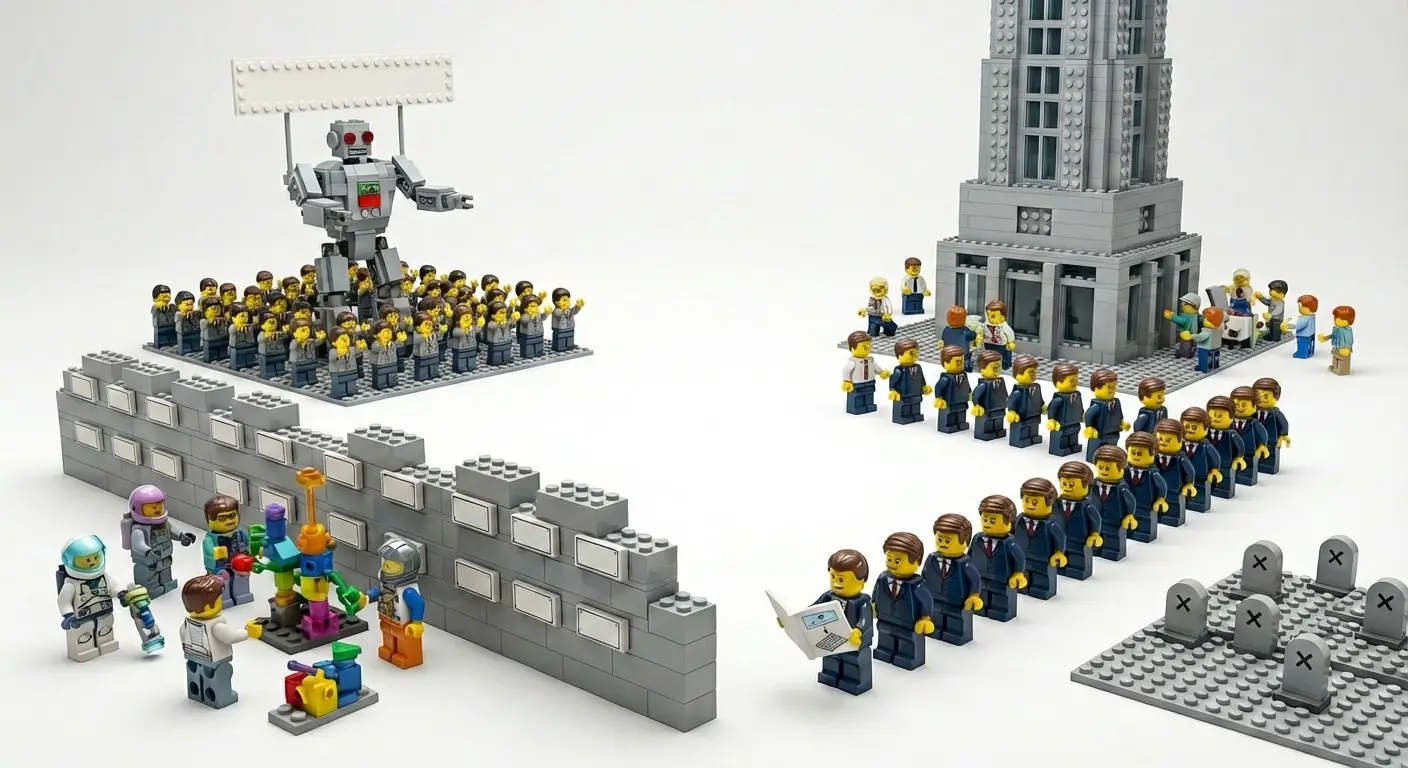
And here's the cruel irony: when the "case" finally appears and everyone feels safe to act... it's too late. The window of opportunity has closed. The first-mover advantage has been captured by those who dared to bet before external validation.
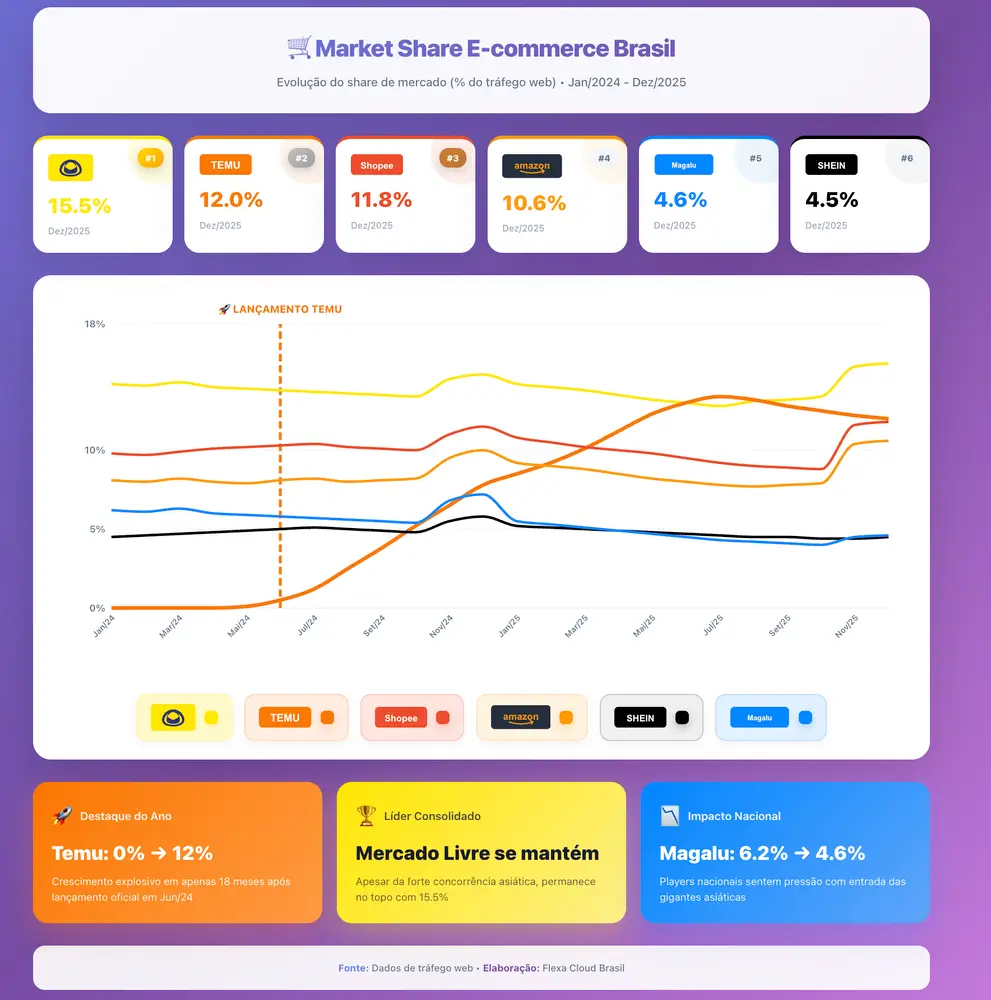
The Temu case: when someone decides not to ask for permission.
Want a concrete example? Look at Temu.
In a very short time, it went from unknown to one of the biggest forces in e-commerce in Brazil. Exponential growth. Market share expanding rapidly. Brutal pressure on traditional marketplaces that had dominated the market for years. Going from zero to leader in 1 year.
What did Temu do that was "revolutionary"?
Nothing that would be technologically impossible for the others.
She simply bet heavily on data and AI, rewrote pricing logic, dominated the supply chain with brutal efficiency, and created an aggressive procurement machine. She operated at scale from day one, without asking for permission or waiting for validation.
Meanwhile, many local players — with more resources, more knowledge of the Brazilian market, and more connections — were in endless meetings asking, "Has anyone done this before?"
Temu went there and did it.
Innovation is not technology. It's a system.
One of the biggest mistakes I see in the market is treating innovation as synonymous with a tool.
"Let's implement AI." "Let's automate this process." "Let's use a new language model."
This is not innovation. This is basic technological adoption.
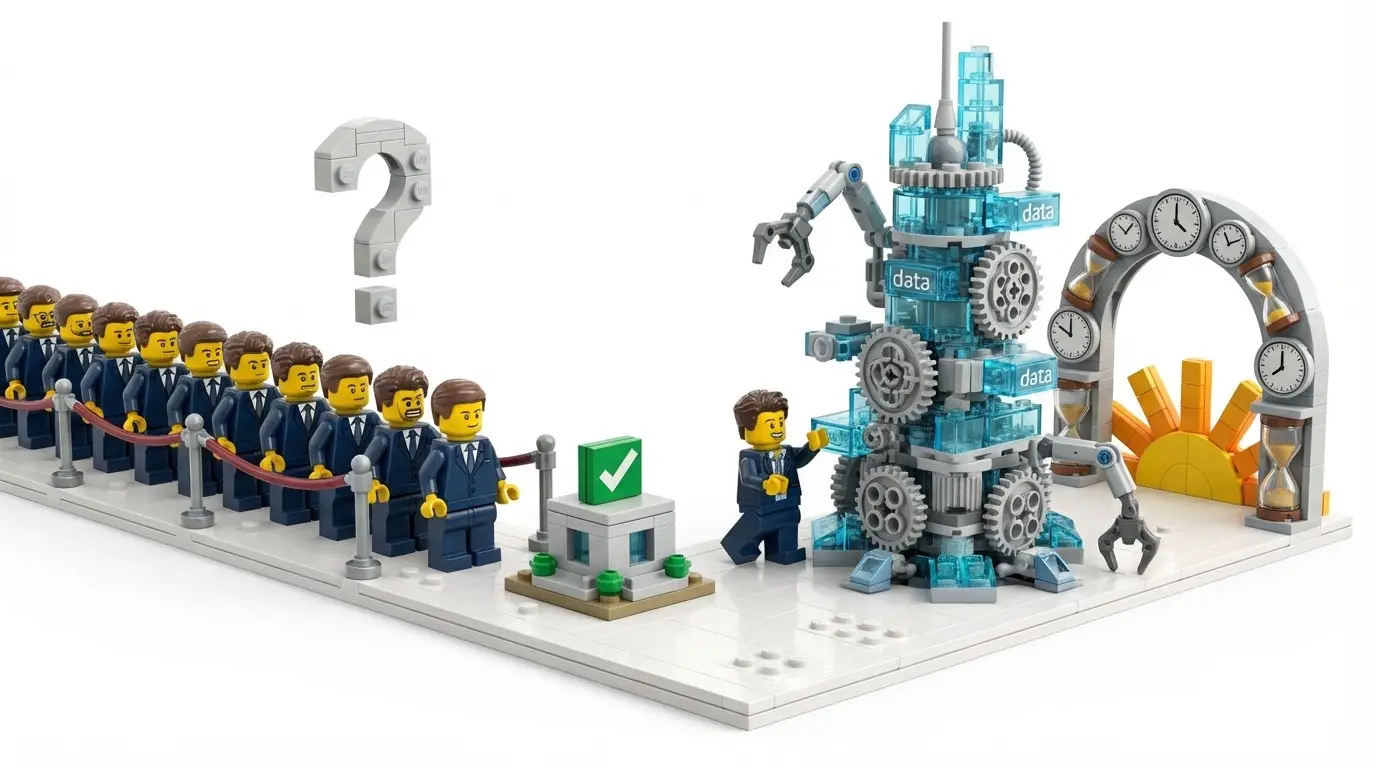
True innovation requires a complete system working in an integrated way: clear governance, prioritization based on business value, in-depth market analysis, applied data science, robust infrastructure management, operational execution capacity, and clear ROI metrics.
Without this system, any initiative becomes an isolated experiment — interesting to present at a convention, but irrelevant to the business outcome.
With this system, innovation becomes a sustainable competitive advantage.
At Flexa Cloud , we structured our Center of Excellence (CoE) precisely to solve this problem. It's not a "test lab" for pilot projects that never scale. It's a results-oriented innovation factory, with a structured pipeline, prioritization by impact, multidisciplinary teams, and real measurement of delivered value.
The most scarce asset in the world today.
We live in the age of infinite information. We have access to reports, dashboards, benchmarks, specialized consulting, international events, and daily webinars.
But the rarest asset today is neither data nor information. It's time.
And there's a silent error happening in companies: overthinking has become more dangerous than making more mistakes.
Companies spend months—sometimes years—analyzing, debating, and refining something that could be tested in weeks. Meanwhile, the market moves on. More agile competitors seize opportunities. Restless talent leaves.
Last year, I attended NRF Asia in Singapore—the world's largest retail trade show outside the U.S. There, I witnessed the Asian mindset in action firsthand.
They test. They make mistakes. They adjust. They redo. They scale up.
No drama. No ego. No excessive approval committee.
Speed is not a consequence of strategy. Speed is part of the strategy.
The invisible cost of waiting.
Every time a company says "let's wait for someone else to test it first," it pays a price that doesn't appear in any financial report:
You lose out on learning —those who experience first accumulate knowledge that can't be bought. You lose timing —markets have windows of opportunity, and windows close. You lose talent —ambitious professionals don't want to work for companies that only copy. You lose relevance —the market narrative is built by those who act, not by those who observe.
Then, you chase after it. More expensive. Later. More difficult. With less margin for error.
The role of leadership in this game
True innovation is not a project with a beginning, middle, and end. It is a permanent organizational stance.
And this attitude starts at the top. Truly innovative leaders ask different questions:
❌ “Who has done this before?” ✅ “If this works, how much value do we capture?”
❌ “What if it goes wrong?” ✅ “What if we do nothing?”
❌ “Is it safe?” ✅ “Is it strategic?”
The difference between companies that lead and companies that follow isn't in the technology budget. It's in the quality of the questions that leadership asks.
Conclusion: the provocation that remains
If you only feel comfortable being second, third, or tenth to do something…
Don't call yourself an innovator.
Be honest with yourself: you're an excellent follower. And there's nothing wrong with that—many companies have built solid businesses by following market leaders.
What's wrong is saying you want disruption... while living by copying. It's putting "innovation" into the company's values... while killing any initiative that doesn't have a validated benchmark.
At Flexa Cloud , we continue to invest in projects before they become "market case studies." With method. With governance. With an obsessive focus on measurable value.
Because we know, from our own experience, that's exactly where the real competitive advantage lies.
Before the pretty PowerPoint presentation. Before the seal of recognition. Before the competitor woke up.
📌 And you: is your company creating the next market trend… or waiting for someone else to create it first?
If this content resonated with you, share it with other leaders who need to hear it. And tell me in the comments: when was the last time your company invested in something without having a "case study" to support it?