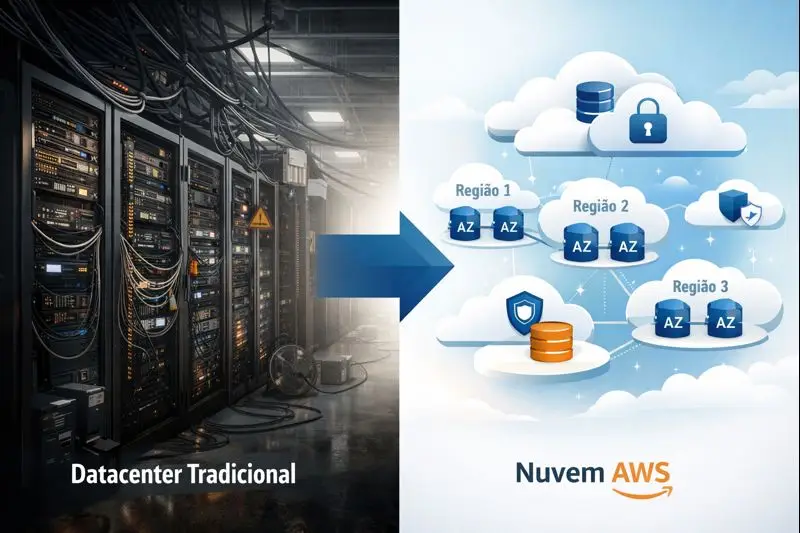
Cloud migration is no longer just a technological decision. By 2026, it will solidify as a strategic move for companies seeking agility, enhanced security, and continuous innovation capabilities. For IT managers, solution architects, and cloud leaders, migrating to AWS with structured planning is fundamental to sustaining operations and preparing the business for the future. In this article, we present how the wave-based approach ensures a safe, efficient, and modernization-oriented journey.
Why migrating to AWS in 2026 makes sense.
With increasingly complex demands—increased use of AI, the need for automation, more agile applications, and more robust regulatory requirements—legacy infrastructures become limiting factors. Migrating to AWS offers clear benefits:
- Flexible scalability, adjusting resources to actual needs.
- Rapid adoption of native services for automation and artificial intelligence.
- Enhanced security and compliance with updated practices and controls.
Wave planning: what it means and why adopt it.
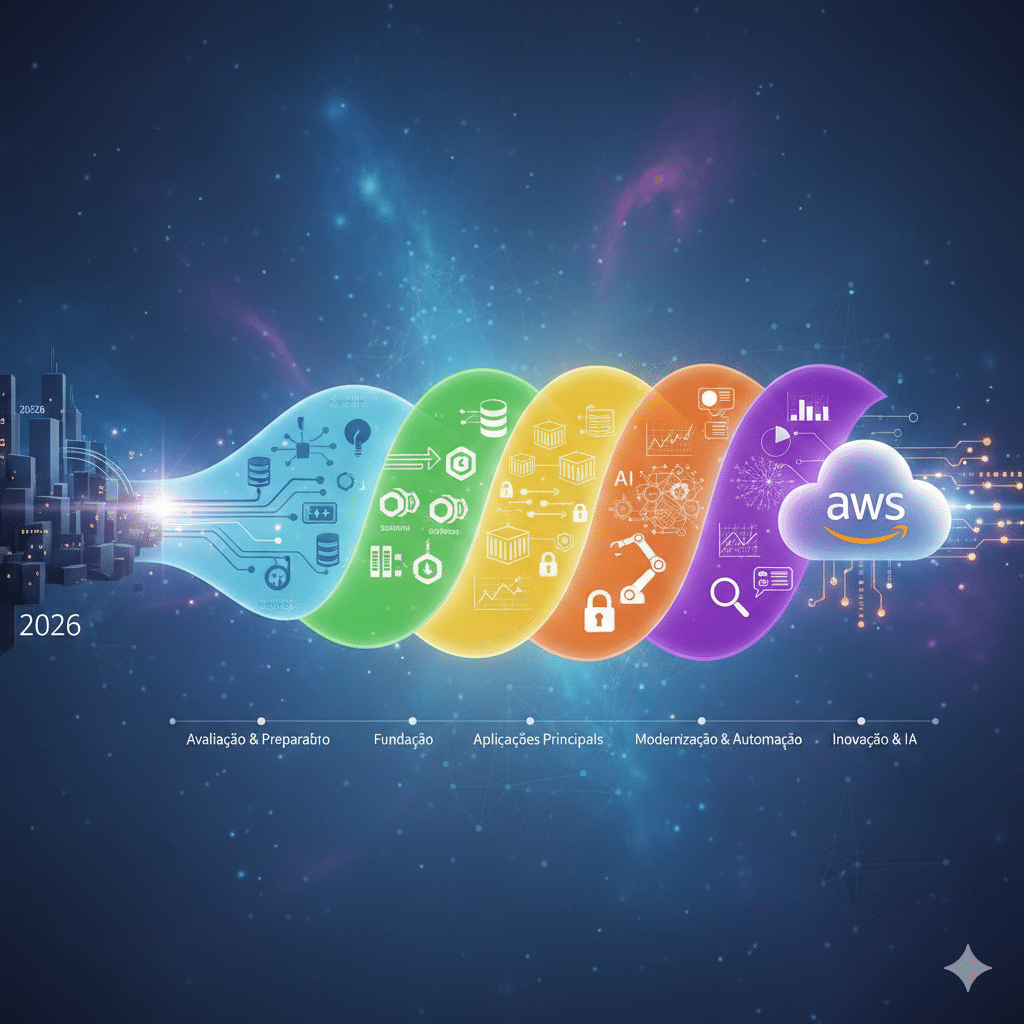
Migrating everything at once can lead to risks, disruptions, and unexpected costs. The wave-based approach divides the journey into structured phases, allowing for controlled progression.
- Assessment and preparation — Application survey, dependency analysis, and prioritization based on technical and security criteria.
- First wave: foundation — Migration of non-critical workloads and essential infrastructure, such as networks, backups, and development environments.
- Second wave: main applications — gradual transition of core systems, with adjustments to modern architectures without operational impact.
- Third wave: modernization and automation — refactoring, adoption of microservices, containers, security automation, and CI/CD pipelines.
- Final wave: innovation and AI — incorporation of advanced data services, artificial intelligence, and intelligent automation.
This methodology allows for continuous learning, risk mitigation, and progressive improvement of governance standards.
How to ensure a safe, modern, and compliant migration.
For migration to deliver real and sustainable results:
- Establish governance and compliance from the outset, including access controls and encryption.
- Automate provisioning, monitoring, and policies, reducing manual errors.
- Plan a modern architecture based on decoupling and infrastructure as code.
- Continuously monitor performance and safety, adjusting as the workload evolves.
- Empower the teams involved and promote alignment between infrastructure, security, and development.
Conclusion
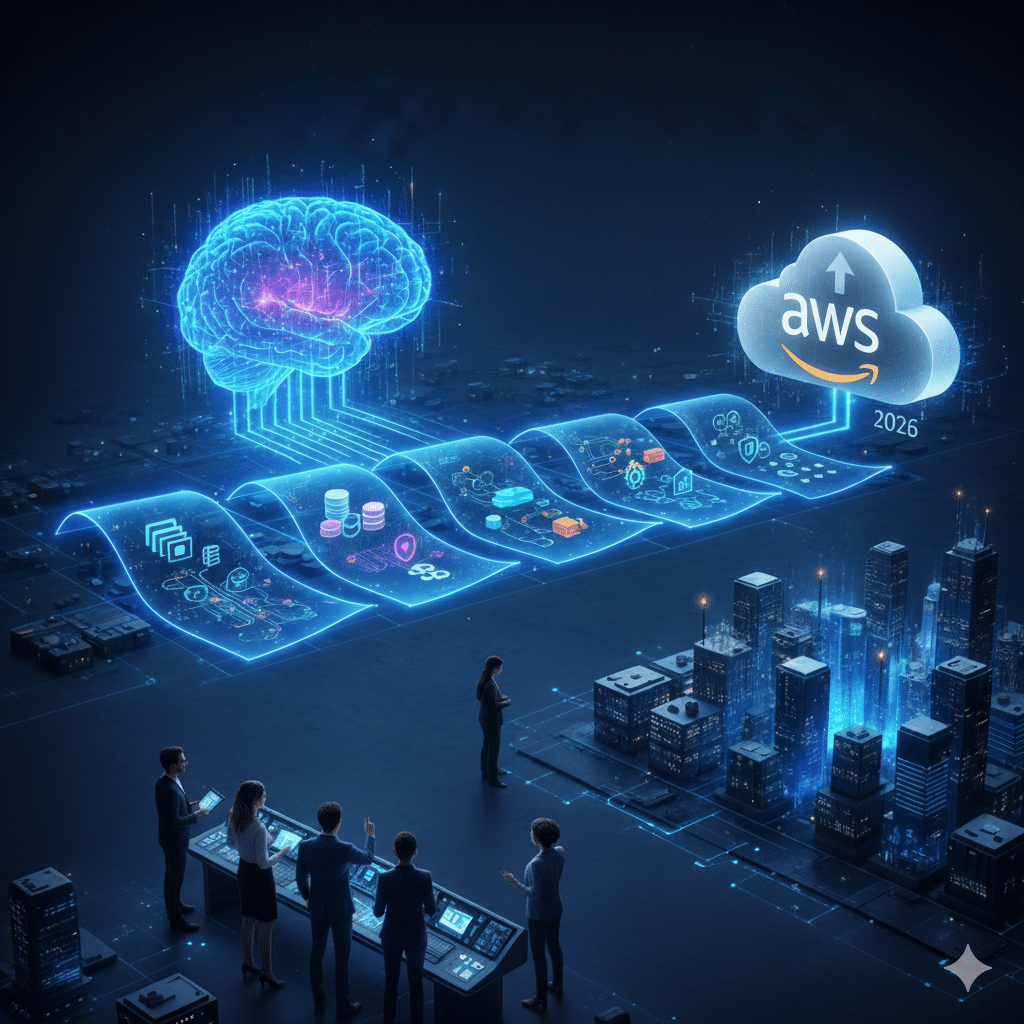
Migrating to AWS in 2026 is more than just moving workloads; it's a strategy to modernize systems, strengthen security, increase efficiency, and enable continuous innovation. A phased approach reduces risk, organizes priorities, and prepares the company for a dynamic and demanding technological landscape.
Contact Flexa Cloud to structure a customized wave migration roadmap and guide your journey to the cloud safely, efficiently, and with a long-term vision.