
For decades, creating a game was synonymous with building a factory. Hundreds of artists modeling characters, painting textures, animating every movement, assembling scenarios polygon by polygon. The cost of a AAA game became astronomical precisely because of this: the majority of the budget goes to the mass production of assets.
This logic is about to be turned upside down.
Recent research points to a future where games no longer come pre-packaged on discs. They are generated in real time, on the player's own device, from AI models running locally on the GPU. The console or mobile phone ceases to be just a player of pre-made content and becomes the factory itself.
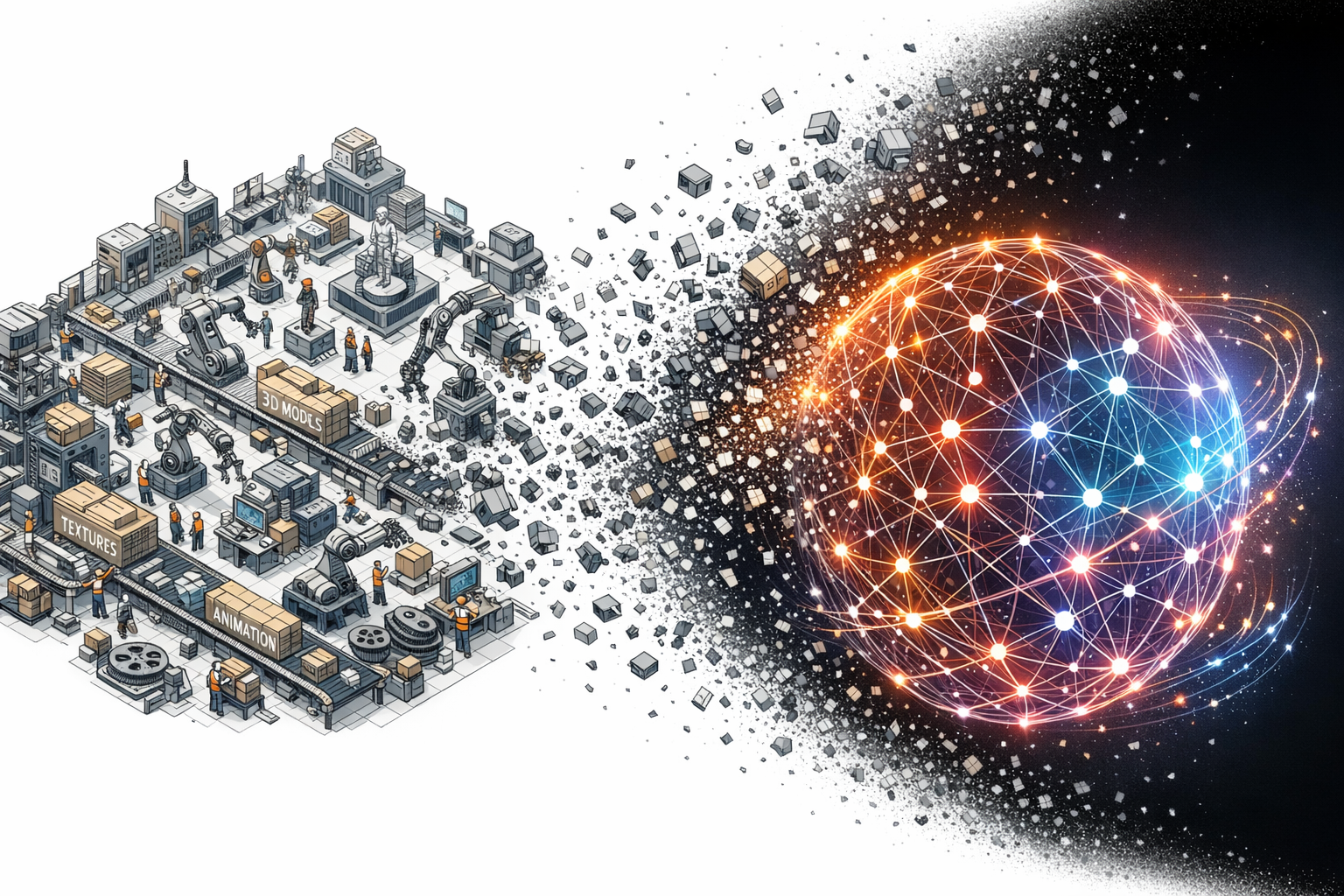
The current production model is a giant assembly line. You need people for each step: concept art, 3D modeling, rigging, animation, texturing, lighting. Each piece is expensive and time-consuming.
When a single AI model can generate the world, characters, and textures on demand, that entire assembly line is compressed into one thing. What once required a specialized workshop becomes a simple inference call. Execution, which was the bottleneck and the cost, becomes a commodity.
This doesn't mean artists will disappear. It means that repetitive, high-volume work, the kind that involves producing the hundredth variation of a rock or a tree, is no longer where the money is.
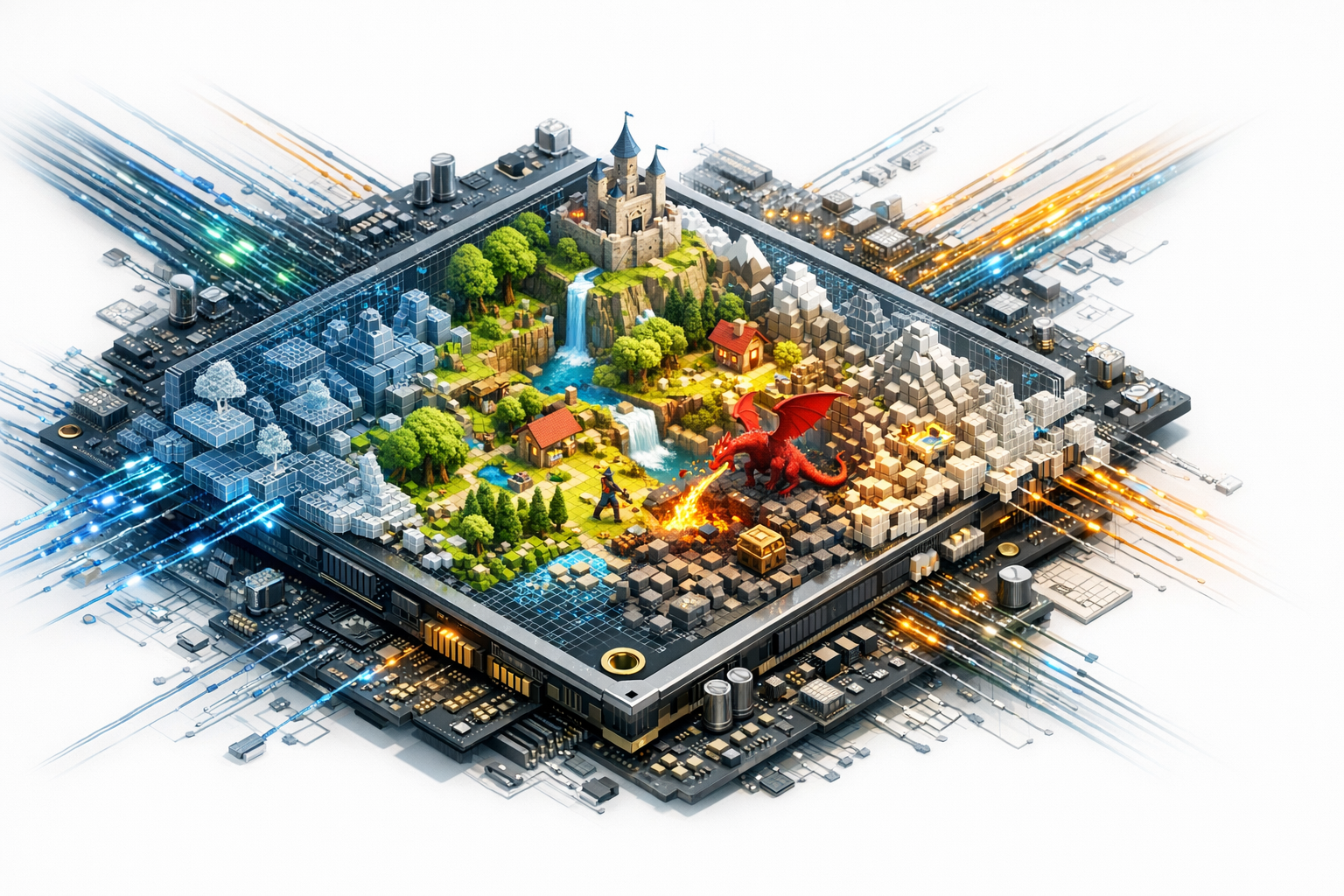
The technical element that makes this possible is the GPU running the model locally. Instead of downloading gigabytes of textures and meshes, the device receives instructions and generates the world on the fly: the terrain, the buildings, the characters, everything materialized from the weights of a model, not from pre-made files.
For the player, the difference is radical. The same game can be different for each person. The world adapts, reconfigures itself, responds to what you do in a way that pre-rendered content never could.
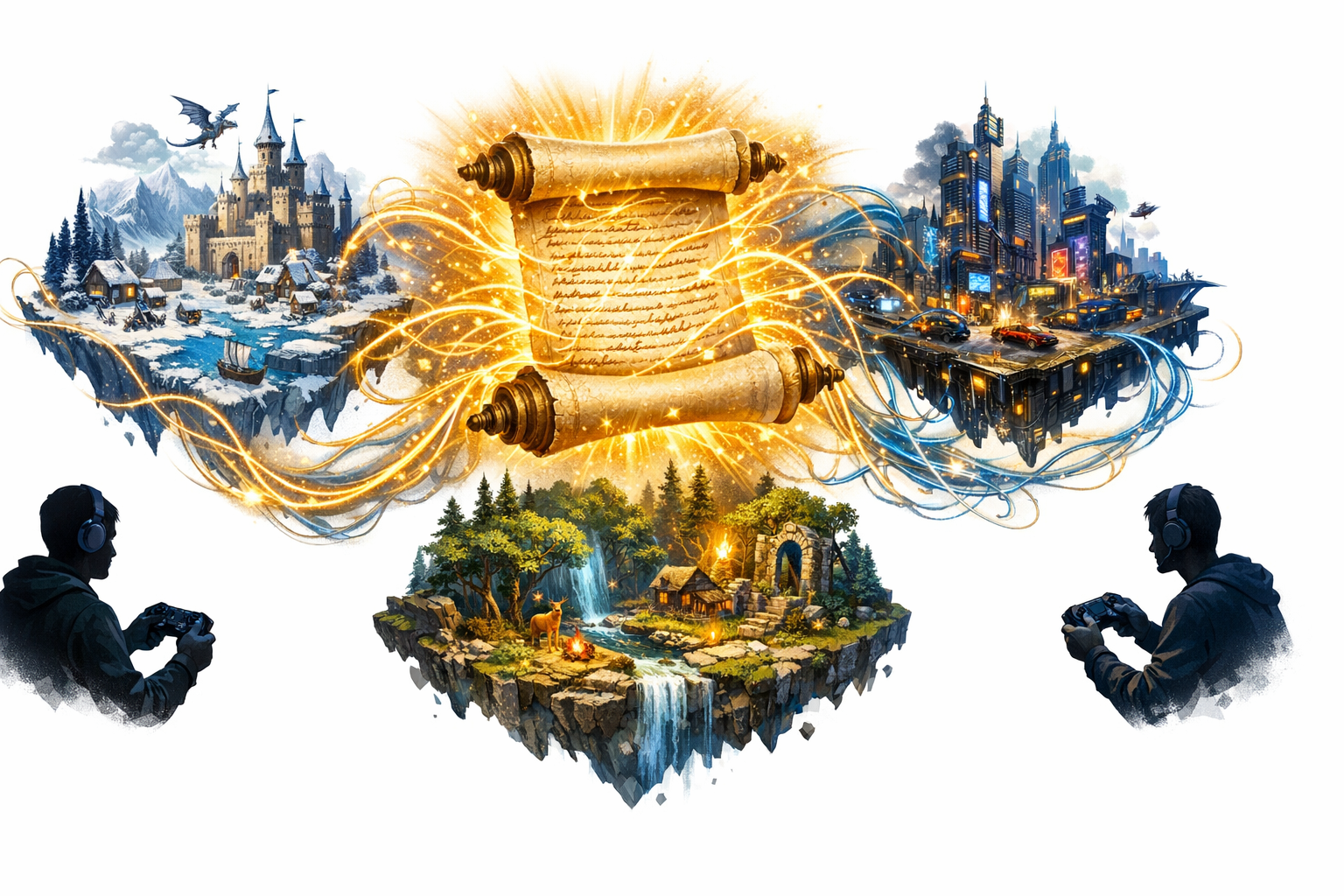
If execution becomes a commodity, the value shifts to the one thing AI still can't adequately replace: creative intent. The script, the direction, the rules of the game, the soul of the experience.
Think of a script as a seed. From that same seed, AI can materialize an icy kingdom for one player and a cyberpunk city for another. What defines quality is no longer who has the biggest army of artists, but who has the best idea, the best script, the best creative direction.
When production becomes cheap, deciding what to produce becomes expensive.

This isn't just a story about games. It's the same movement happening across every industry. Generative AI play.
When the execution of a task becomes a commodity—generating a text, an image, a code, an analysis—the competitive advantage ceases to be the ability to produce and becomes the ability to decide, orchestrate, and direct. Value moves up the chain: from the manual labor to the brain, from the factory to the script.
For companies, the question is no longer "how do I produce faster?" but "what is my roadmap?". Those with clear intentions, good processes, and the right infrastructure to efficiently run these models will capture the value. Those who continue to compete on volume of execution will see their margins vanish.
It is precisely at this point that the Flexa Cloud Our role is to help companies build their AI infrastructure, from training to inference, so they can focus on the roadmap, not the assembly line.
This article is an adaptation of the original content published by Deivid Bitti on LinkedIn. To read the full version, Access the original article..